Compliance should not begin when someone audits the file. It should be supported at each relevant stage of the client and operational process.
The problem with compliance after the fact
In many organisations, the client work happens first and the compliance check happens later. The client is onboarded, communications are exchanged, advice or services are delivered and the file is then reviewed to determine whether every requirement was properly completed and recorded.
This approach places the reviewer in the position of reconstructing the past. Missing documents must be requested, notes must be clarified and evidence must be gathered. The business carries risk during the period before the gap is identified.
Compliance by design
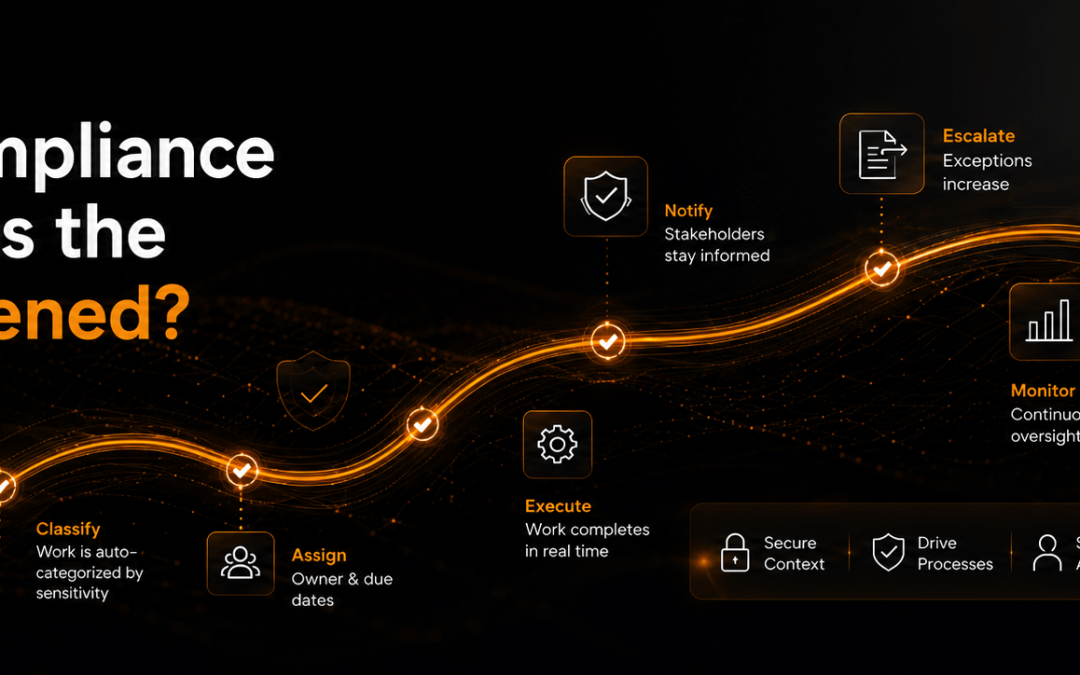
A stronger model builds the control into the relevant workflow. Required information is identified during onboarding. Documents are requested and linked to the client. Risk ratings and approvals are completed at the appropriate stage. Advice records, reviews and communications become part of the activity history. Exceptions are visible to the people responsible for resolving them.
This is sometimes described as compliance by design: the process is structured so that the right action is easier to complete and a missing step is easier to see.
Evidence should be a by-product of good work
When compliance is connected to normal activity, evidence is created as the work happens. The organisation does not need to maintain a second version of the process solely for an audit. This can reduce duplication while strengthening accountability.
pfireStorm already provides central client records, documents, communications, tasks, reviews, workflows and activity histories. These building blocks can support a business in creating visible, repeatable and auditable processes.
Manage exceptions, not every file manually
Effective management should be able to focus attention on what is incomplete, overdue or unusual. Rather than repeatedly checking every file in the same way, the operating environment should help identify exceptions: missing documents, overdue reviews, incomplete tasks, unresolved complaints or records requiring approval.
The pfireStorm Evolution direction is towards stronger compliance reporting, workflow integration and exception management. These capabilities are intended to support—not substitute for—qualified compliance oversight and responsible management.
Design controls around real work
Start by selecting one high-risk process, such as new-client onboarding or an annual review. Identify each required action, the responsible person, the evidence produced, the approval needed and the consequence of a missed step. This creates a practical blueprint for embedding compliance into the workflow.
Contact Us