
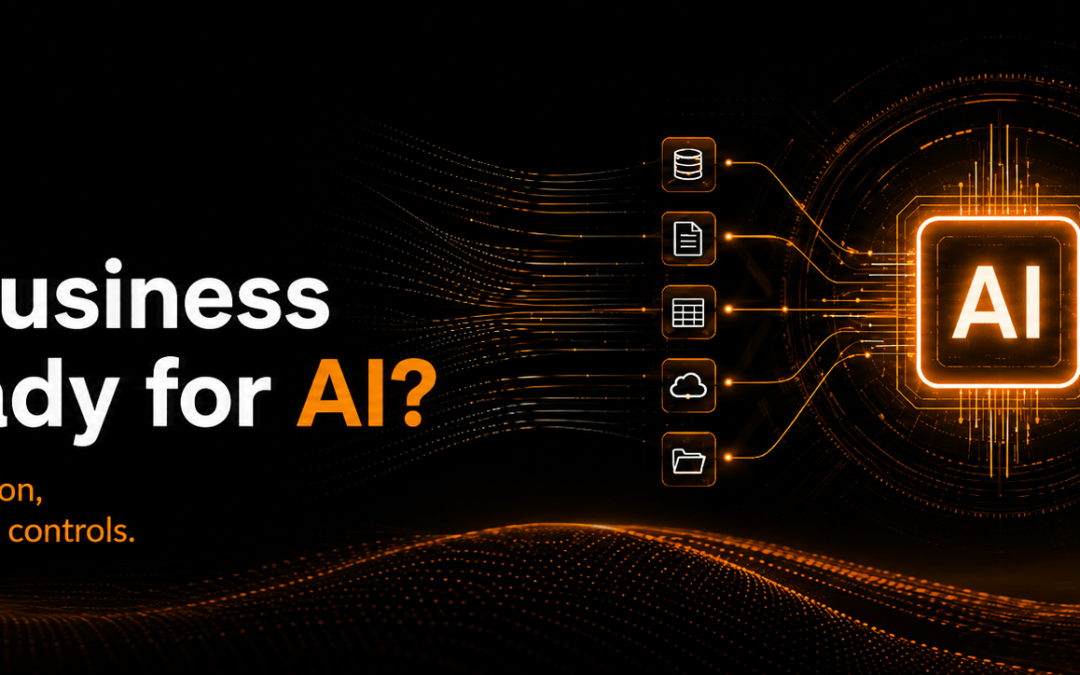
Adding AI to an unstructured business does not remove the underlying disorder. Reliable information, visible processes and clear controls must come first.
AI is not a shortcut around weak operations
Artificial Intelligence is rapidly changing expectations around productivity, reporting and client service. It can summarise large amounts of information, assist with routine drafting, identify patterns and help people prepare for decisions. But it does not automatically fix poor data, unclear responsibilities or fragmented processes.
If client records are incomplete, documents are poorly organised and actions are not consistently recorded, AI will operate on an unreliable foundation. The quality of the output will reflect the quality of the environment in which it works.
What an AI-ready environment looks like
An AI-ready business has structured client and entity information, accessible communication histories, organised documents, defined tasks and workflows, consistent review records and an auditable history of activity. It also has clear rules governing access, privacy, approval and professional accountability.
These foundations matter because useful AI is contextual. A meeting summary is more valuable when it relates to the correct client and current workflow. A task recommendation is safer when responsibilities and deadlines are already defined. A management insight is more credible when source data is complete and consistent.
Start with practical use cases
Businesses do not need to begin with a grand AI strategy. They can start by identifying repetitive, information-heavy activities where assistance would create value. Examples may include preparing for client meetings, summarising a file, identifying missing information, drafting routine communications, prioritising work or supporting management reporting.
Each use case should then be tested against three questions: Is the necessary data available? Is the process defined? Is there an appropriate human review and control step? If any answer is no, the business has identified the work required before AI can be introduced responsibly.
pfireStorm’s operational foundation and future direction
pfireStorm already provides many of the foundations required for intelligent operations: central client records, documents, communications, tasks, workflows, reviews and audit histories. The pfireStorm Evolution programme is designed to build on this structured environment with conversational and AI-assisted capabilities over time.
The purpose is not to remove professionals from the process. It is to help capable people find information faster, reduce repetitive administration and act with better context.
Prepare today for what comes next
AI readiness is therefore not primarily about buying an AI product. It is about improving the way the organisation captures, controls and uses information. Businesses that undertake this work now will be better positioned to adopt useful AI while protecting professional judgment, privacy and accountability.
Contact Us